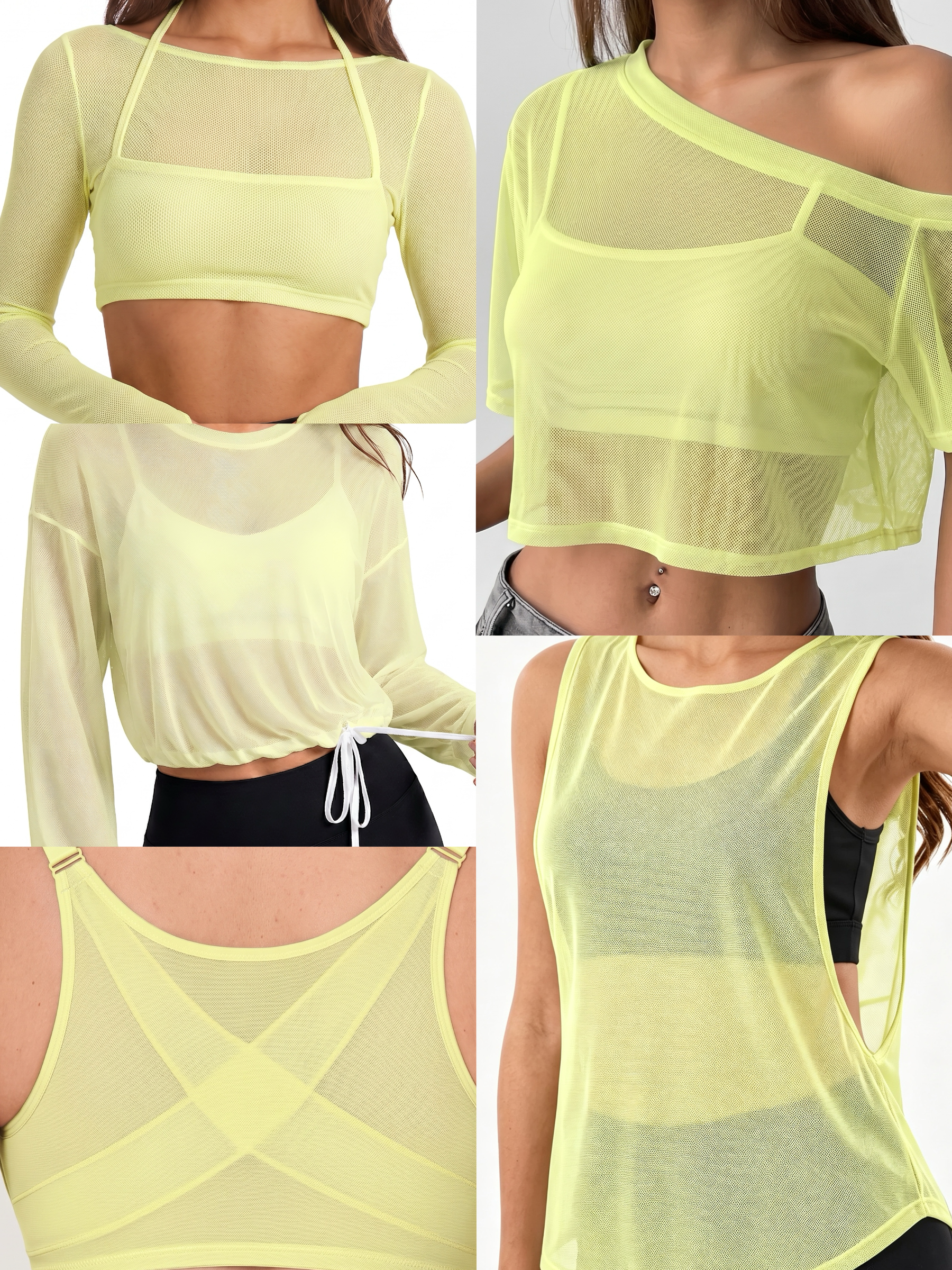
Natural Cooling vs Chemical Cooling fabric: Which Is Better for underwear&activewear
For brands and designers looking to develop next to skin sportswear, it can be challenging task to find suitable cooling fabric. When people first receive fabric samples and evaluate them by hand, they may feel cool and comfortable; yet after these fabrics are made into finished garments and used during physical activities, the actual wearing experience may be different. When wearers start exercising and begin to sweat, fabrics may feel warmer against the skin, the fabric may begin to feel slightly sticky, both of which can affect wearing comfort, and both can affect wearing comfort,especially in sportswear designed for direct skin contact.
Fabrics ought to be lightweight and allow air to circulate, they also require sufficient stretch to accommodate a wide range of movement; in addition, surface touch, fabric weight and durability are further points that also need to be considered and this situation becomes more obvious for garments subjected to repeated washing and wear. As a result, cooling fabric selection should not focus solely on the initial cool sensation created upon initial skin contact, these kinds of materials are also supposed to perform properly under real‑world wear conditions.
At the time people think of cooling fabric nowadays, cooling fabrics can generally achieve a cooling sensation through two common approaches; one approach can create a cooling sensation through fiber properties and fabric structure , and the other uses chemical finishing treatments to create or enhance a cooling sensation of textiles. Chemical cooling processing can be carried out on textile goods, so these treatment can create or enhance a cooling sensation upon skin contact, this can be a practical option for certain product requirements, yet its performance can be affected by processing methods, base fabric composition, washing conditions as well as the wearing habits of finished clothing items.
Natural physical cooling fabric works differently, it rather than relying heavily on additional treatments, instead, it can provide a cooling sensation and contribute to wearing comfort through fiber properties and fabric structure, this can be useful for next to skin sportswear, where cooling fabric needs to be balanced with breathability,moisture management,softness and stretch, because cooling performance needs to be balanced with air‑permeable performance, moisture management, softness and stretch.
For example, lightweight mesh structures can help air flow around human bodies, and the right fiber blend can help balance wearing comfort, movement flexibility and durability; on the contrary, if fabrics are heavy, poor in air permeability or short of stretch, wearers may still experience a stuffy feel or restricted movement even after cooling treatments are applied. So people should not only pay attention to the cool touch when fabrics first meet skin, evaluate the overall performance of the fabric when people exercise, sweat and wear fabrics close to skin for long periods.
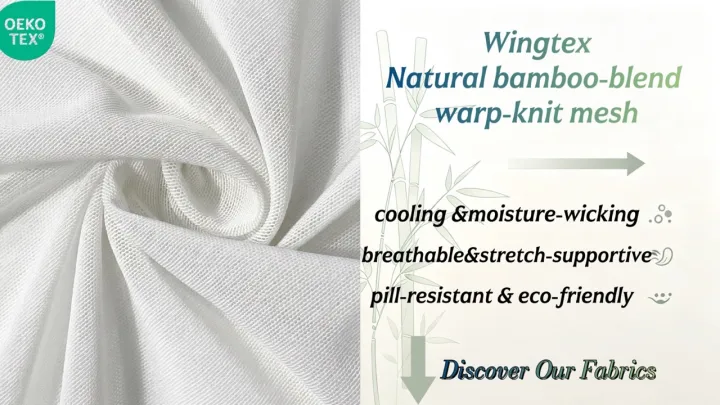
Wingtex RS002 Bamboo fiber mesh fabric can be a suitable option for applications where light weight, comfort and air flow performance are valued; the bamboo fibre mesh fabric used in this work is made by weaving 60 count yarns, and it has a weight of roughly 140 GSM, its material composition consists of 48% recycled nylon, 21% spandex together with 31% bamboo fibre. As a component within these blended raw materials bamboo fiber can contribute to a soft and smooth hand feel,which can be beneficial for fabrics designed for direct skin contact; nylon helps improve fabric strength and structural support, it can also contribute to the balance between softness and durability, the 21% spandex provides good stretch and recovery, helping the fabric move with the body.
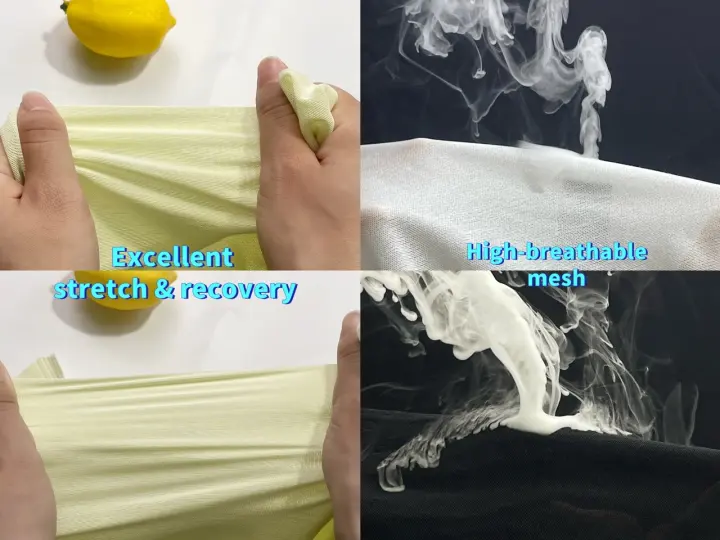
In addition, lightweight mesh structures can keep fabrics light and air‑permeable, this can be useful for next to skin sportswear and other clothes that touch human bodies directly; when all these features are put together, this features give the fabric a combination of softness, stretch, lightweight structure and air‑permeable performance that may suit a range of next‑to‑skin sportswear applications .
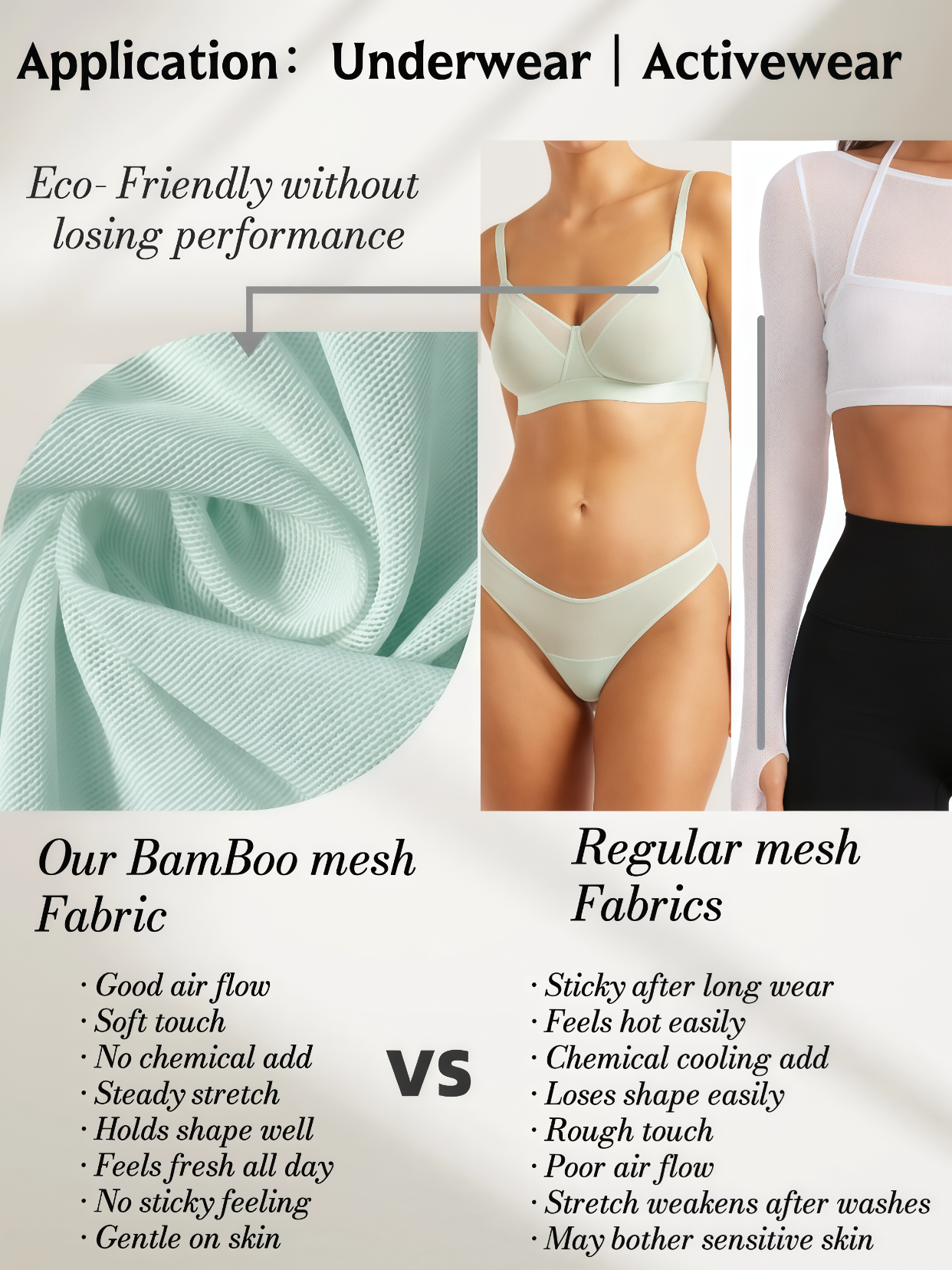
No single cooling fabric is suitable for every sportswear application of sportswear, the right fabric choice depends on garment design, exercise intensity, target markets, expected hand feel and specific performance standards of finished products. For brands and designers who are developing next to skin sportswear, brands and designers should therefore consider several factors when evaluating fabrics, key factors include fiber composition,fabric structure, weight, stretch, breathability and long‑term wearing performance,among other considerations, and such evaluations can offer more realistic references for fabric selection.
Should you be looking for bamboo‑fibre mesh fabric that adopts 60‑count yarns, carries a weight of 140 GSM and consists of 48% recycled nylon, 21% spandex as well as 31% bamboo fibre, we can provide fabric samples and color cards for your evaluation for your assessment; further detailed we can also discuss your specific requirements in more detail, such demands may involve fabric colour, fabric weight, surface touch, stretching performance, fabric constructions and other tailor made requests, and we can also work with you to develop a fabric solution based on your specific requirements for your sportswear development tasks