
The difference between Woven VS Knit Fabric | Warp Knit&Weft Knit&Tricot?
If you often work with garment fabrics, you should frequently see these English words: Knit, Woven, Warp Knit, Weft Knit, and also Tricot. In fact, they all describe fabric manufacturing methods and represent different fabric structures.
For example, shapewear, fajas,yoga pants and underwear we usually wear mostly use knit fabric; while shirts, suits, jeans and trench coats mostly adopt woven fabric.
Why fabrics made from the same textile yarn have some soft with stretchability and some stiff, flat and not easy to deform? Why some fabrics can stretch when pulled gently while others are hard to pull?
In fact, these differences do not completely come from fabric composition, yarn and fiber itself, but from a very important factor: how yarns are arranged and connected inside the fabric.
Let’s start with the most basic Knit and Woven.
I. What is the difference between Woven and Knit Fabric?
1. Woven Fabric
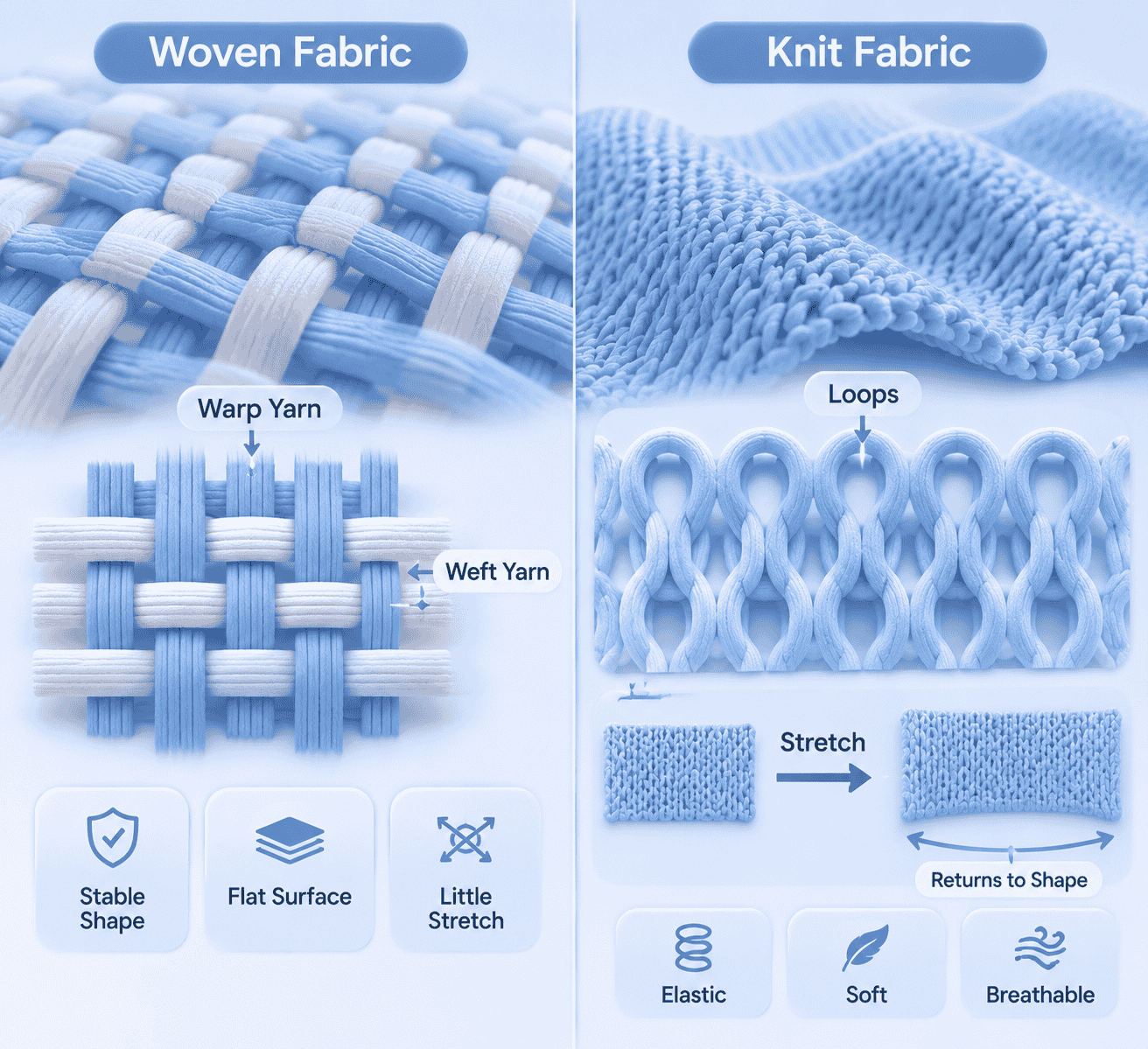
We can imagine yarns as thin ropes. If two groups of thin ropes cross vertically and horizontally, one pressing another, arranged neatly together to form a piece of cloth, this is Woven.
woven VS Knit fabric
Warp Yarn: arranged along the length direction of the fabric.
Weft Yarn: arranged along the width direction of the fabric.
Warp yarn and weft yarn interweave at nearly 90 degrees, just like weaving a basket, interlacing one over and one under. Common denim, shirt, suit, jeans, trench coat all belong to woven fabric.
The biggest feature of this structure is stability. Because warp and weft yarns cross and restrict each other, yarns are not easy to move randomly, so the whole fabric is relatively flat, good dimensional stability and not easy to deform by pulling. But this structure also has a feature: the moving space between yarns is relatively limited. Therefore, ordinary woven fabric usually almost has no elasticity. If you want it to have obvious elastic force, spandex yarn needs to be added.
2. Knit Fabric
Knit fabric is completely different. It does not let two groups of yarns cross, but forms continuous loops by bending yarns, then makes loops interpenetrate each other to finally form cloth.
You can imagine the process of knitting a sweater in daily life. A wool yarn is continuously bent by knitting needles to form successive small loops, and newly formed loops pass through previous loops, finally connected into a whole piece. Circular knitting machines work on a similar principle, but industrial equipment can use a large number of knitting needles at the same time to produce fabric at high speed and continuously.
Then why knit fabrics usually have better elasticity than woven fabrics? The key lies in these loops. When you stretch knit fabric, the loops will not break immediately; instead, they deform first: the originally bent loops are pulled open and elongated, and the space between loops also changes. It is just like a spring. When you pull it gently, it stretches; after releasing, it tries to restore its original shape. This is the reason why knit fabric can have natural stretch even without adding spandex.
Of course, not all knit fabrics have extra elasticity. The specific elasticity is also related to loop structure, yarn, fabric density and spandex content. For example, ordinary yarn knit T-shirt fabric and high elastic yoga pant fabric mixed with spandex yarn, although both belong to Knit, the actual elasticity of finished fabric can differ greatly.
II. Knit fabrics are divided into two types: Warp Knit VS Weft Knit
If you look closely during your daily fabric studies, you may notice another question. All are knit fabrics, why some cloth is very soft with large stretch range, while some are relatively flat, stable and even feel a little like woven cloth?
This is because knit fabric has two different weaving methods: Warp Knitting and Weft Knitting. Their core difference lies in the direction yarn forms loops and the feeding mode of yarn.
1. Weft Knit
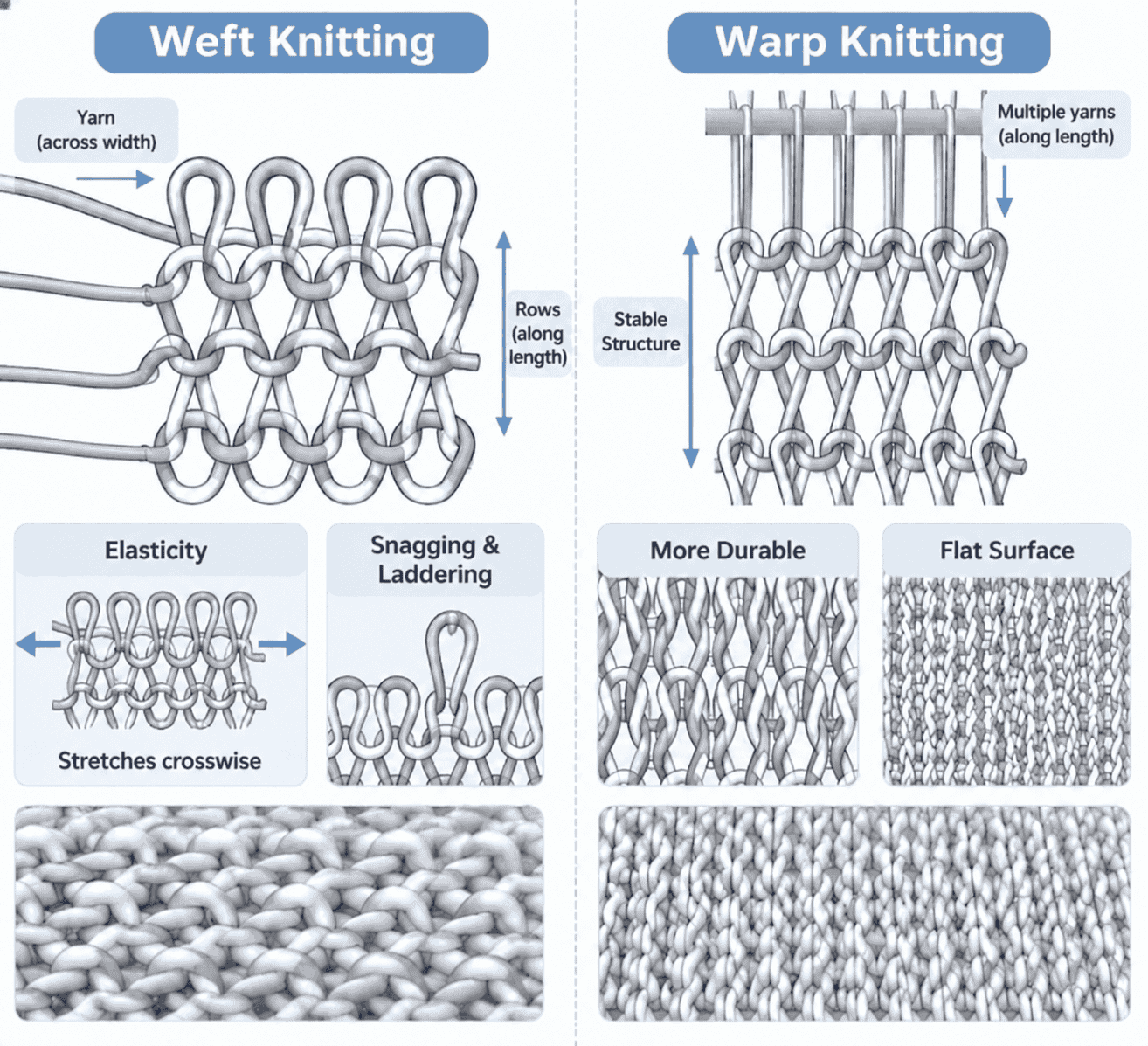
Weft knitting is a very common knit fabric in daily life.Weft knitting works this way: yarn moves mainly across the width of the fabric, and makes horizontal rows of loops with rows of knitting needles. One yarn runs left to right to make one row of loops. The next row of loops goes through the row before it, building up step by step to make the whole piece of fabric.
The biggest feature of this structure is when you stretch weft knit fabric horizontally, loops can gradually open and deform, so it usually has good crosswise elasticity. If spandex is added, elasticity and recovery performance can be further improved.
Common fabrics below are weft knit:
Single Jersey Fabric (single side weft knit structure)
Rib Knit Fabric
Interlock Fabric (double side weft knit structure)
French Terry Fabric
Fleece Knit Fabric (weft knit + fleece finishing)
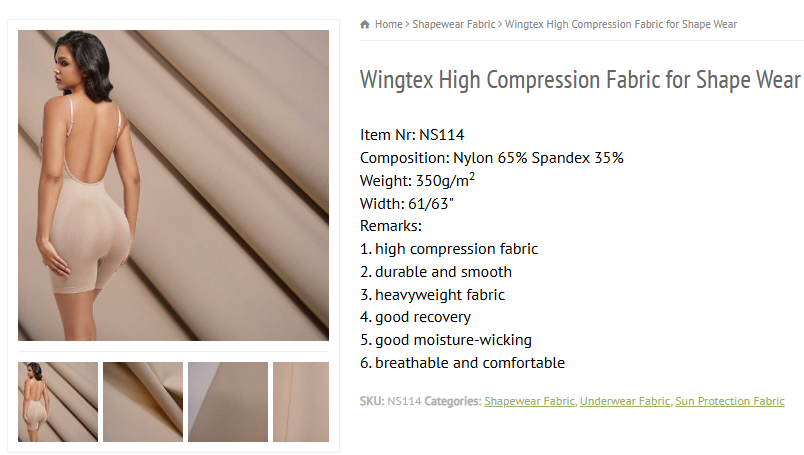
For example, most pure cotton T-shirts we wear are single side weft knit structure; fajas and shapewear often use Interlock nylon and spandex cloth of double side weft knit structure, because this combination owns good elasticity and supporting force at the same time, which is the core performance required by this kind of apparel.
However, weft knit also has its own shortcomings. Because loops interpenetrate each other, once some loops are damaged, partial weave may unroop along the loop direction, which is what we call snagging and laddering.
warp knit VS weft knit
2. Warp Knit
Warp knit also forms fabric through interpenetrated loops, but its production method is greatly different from weft knit. Weft knitting can be simply understood as continuous yarn knitting in the horizontal (width) direction, while warp knitting feeds many parallel yarns running in the vertical (length) direction to form fabric simultaneously. Each yarn follows its own unique path and swings side to side between the knitting needles to create interlinked loops.
This structure brings warp knit fabric an obvious advantage: stable structure, not easy to ladder. Why? Because the loops in warp-knitted fabric are formed by many separate yarns, their interlocking structure is more complex. When loops at a certain position are damaged, it will not continuously unroop along the fabric like ordinary weft knit fabric.
At the same time, warp knit fabric usually has good dimensional stability, flat cloth surface and tight structure. Multiple yarns participate in weaving along longitudinal direction, stable structure, not easy to ladder, cloth surface is usually flat, widely used in underwear, swimwear, sportswear and mesh fabric.
This more complex structure of warp knit fabrics explains why warp knitting machines cost more. Standard Tricot warp knitting machines typically range from $30,000 to $120,000. In general, they cost 2 to 4 times more than ordinary circular weft knitting machines.
III. What exactly is Tricot? What is its relation with Warp Knit?
Now we finally talk about Tricot. Many people when first seeing this word, will think it is an independent knitting classification same as Warp Knit and Weft Knit.
Actually it is not. Tricot belongs to one type of Warp Knit. Simply speaking: Warp Knit is the big category of warp knitting, while Tricot is a specific fabric structure under warp knit.
You can understand it as below.
Then besides Tricot, are there other types of Warp Knit?
Yes,of course. Tricot is not equal to all warp knit fabrics.There are other warp knitting varieties. Another major type is Raschel warp knitting. Raschel machines can make many complex fabric structures, including mesh, lace and scalloped edges.
V. For fabric buyers, how to select between Warp Knit VS Weft Knit?
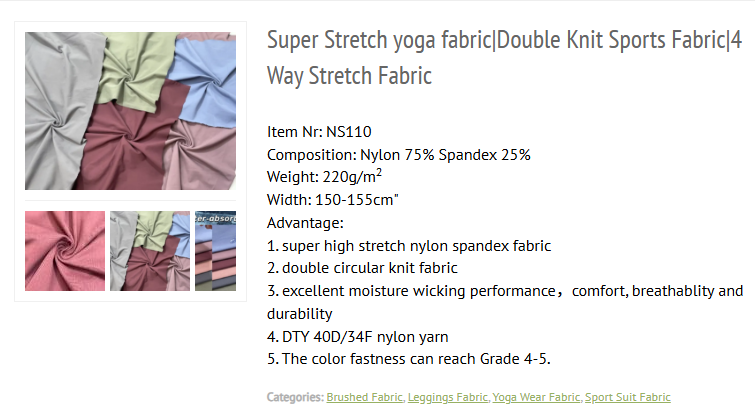
1、If pursuing softness, body fit and large stretch, you can consider weft knit. The loop structure of weft knit has large deformation space. Cooperated with elastic fibers such as nylon and spandex, it can make soft and high elasticity skin-friendly fabric.
For example, seamless underwear, faja and yoga apparel can adopt weft knit fabric. The following two fabrics are hot-selling high-quality products with weft knit structure:
2、If pursuing stable structure, light weight and anti-ladder property, you can consider warp knit.
Warp knit fabric generally has good structural stability, can produce light, flat elastic fabric, and also fabric with different pore size mesh structure. Especially some underwear fabrics that need to balance support, air permeability and elasticity, warp knit is a very common choice.
For example, mesh underwear, elastic lining cloth, swimwear and so on.
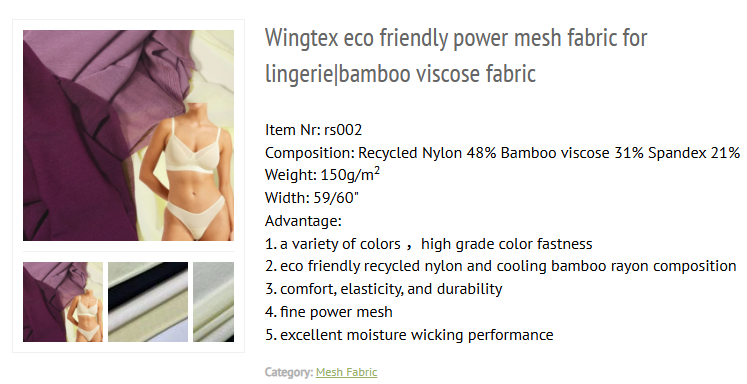
Wingtex RS002: If you are looking for high-performance underwear fabric with soft skin touch, balanced air permeability and elasticity, you can further know Wingtex RS002.
This fabric adopts warp knit structure, combining 48% recycled nylon, 31% bamboo fiber and 21% spandex. Bamboo fiber brings soft and skin-friendly hand feel, recycled nylon provides good yarn strength and durability, and 21% spandex endows fabric excellent elastic performance. Meanwhile, RS002 adopts fine mesh structure, which can provide better air circulation space when worn next to skin. It combines skin-friendly feature of bamboo fiber, performance advantage of recycled nylon and structural feature of warp knit mesh fabric, providing new fabric option for apparel brands to develop differentiated products.
Therefore, warp knit and weft knit do not have absolute good or bad. What really needs to be considered is what wearing experience you want the final fabric to present, and what garment structural requirements need to be satisfied.
