
What You Must Know About Winter Yoga Fabric
Worried About Feeling Cold After Sweating During Winter Yoga? Moisture Wicking and Quick Drying Fabrics Can Help
Winter yoga offers one way for people to keep moving in cold months; picking suitable clothing, however, can bring trouble. The human body will heat up as yoga continues, and sweat may come out; clothes that stay damp for long will cause discomfort, or make people feel cold, especially when movements slow down, or the yoga session ends.
For yoga clothing brands, and other sportswear producers, fabric selection carries real importance; fabrics that move sweat away and dry fast can handle sweat problems, and raise comfort levels for people doing winter yoga.
Why Do People Feel Cold After Sweating?
Sweat release acts as the body’s natural method to control temperature while people exercise; sweat trapped inside clothing will hurt user comfort.
Yoga practice mixes active body movements, and slow, still poses; human bodies produce less heat once activity slows down; wet fabric holds water, and this water evaporates to pull heat away from skin, so cold feelings will appear.
This cold feeling becomes easier to notice inside cold yoga studios, or open air spaces; fabric choice needs to take softness, stretch, and sweat handling ability into consideration.
What Is Moisture Wicking Fabric?
This kind of fabric carries the function to carry sweat away from human skin, and spread liquid across the whole fabric surface; it lowers the sticky feeling of sweat sitting next to skin during exercise.
Its working effect relies on many elements; these elements cover fiber types, yarn shapes, fabric structures, and post production treatments; some polyester or nylon materials use special yarn, or special build, to let liquid travel more smoothly.
People wear this kind of cloth; the material will not block sweat out of human bodies, and it cannot hold lots of water either; the main job of this material is to deal with sweat, while people put on this piece of clothing.
Yoga clothing makers choose materials for their products; they have to test how the material works in real daily use, not just read the labels that list fiber parts.
Why Is Quick Drying Performance Important?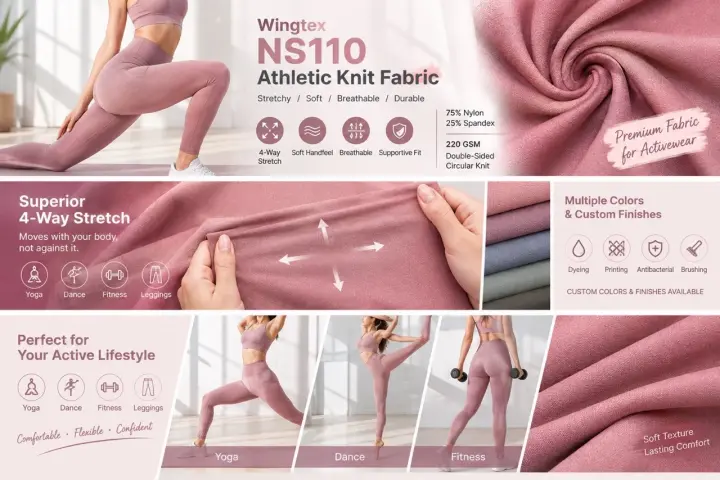
Sweat transfer and fast drying connect with each other, yet they stand as separate features; sweat transfer describes how liquid leaves the skin, fast drying describes how quickly liquid evaporates out of fabric.
Fabric drying speed gets affected by weight, thickness, inner structure, fiber material, outside temperature, air wetness, and air flow.
For winter yoga users, fast drying fabric shortens the time clothes stay wet after sweating; this improves comfort when users shift from active poses to rest poses, or finish their exercise.
Fast drying fabric alone cannot keep people warm; clothing layers, fabric thickness, and cold air blocking also play key roles under winter conditions.
What Should Brands Consider When Choosing Winter Yoga Fabric?
When teams create winter yoga garments, brands have many points to think over.
Sweat handling; the material should guide sweat away from human skin; brands can ask for sample pieces or inspection data, to verify its actual effect.
Drying capability; brands need to test how fast the fabric can dry, and confirm whether this property comes from its layout, raw fiber, or surface processing.
Elasticity and shape recovery; yoga outfits must fit various body moves, so good stretch and bounce back performance are necessary.
Soft touch and wearing experience; yoga clothes are worn right next to skin, so the fabric must feel nice during use.
Material weight and heat retention; lighter materials can make movement easier, while thicker or brushed cloth can hold more warmth; the final pick is decided by local weather, garment style, and usage scenarios.
Long term performance; repeated washing may change fabric look and function; this problem is more obvious for cloth with special surface treatment; brands need to check fabric status after many wash cycles.
No single feature can judge if one fabric works well for winter yoga; the final decision comes from the combined effect of all these traits.
Can One Fabric Meet Every Need?
Not every fabric works well for all winter yoga cases; people create materials for high energy movement, and such materials mainly help draw sweat out and remain lightweight; people make fabric for low speed yoga practice, and this fabric requires more softness and can hold heat better.
A certain fabric can show good results inside warm studios, but people may not pick this fabric for outdoor yoga when the air is cold.
When brands want to set their fabric choices, they have to check how strong the activity will be, what the outside air is like, who will buy the clothes, and how the clothes are made; teams can use samples and easy tests, so they can watch how the material works when people really use it.
Brands can carry out joint work with fabric providers; providers allow brands to check many different usable materials, and brands can learn whether extra changes are still necessary.
Develop Fabric for Your Activewear Project
Different yoga clothing projects call for different fabric plans; fiber makeup, yarn choices, cloth structure, material weight, and post processing will all change the final product result.
We work as a fabric supplier; we can talk through your product’s usage scene, preferred material makeup, target weight, stretch demand, color requirement, and sweat management goal; based on existing raw materials and production limits, we can explore feasible choices, and confirm if extra testing is needed.
If you plan to make winter yoga wear or other sports garments, you may reach out to talk over your demands; you can also apply for fabric samples, to check its touch, elasticity, and fit for your project.
Picking proper fabric starts with knowing your product well; we can search for suitable materials for your next sportswear collection
Related Product

